They kept her under water until her lungs burned and her body gave out. They asked again and again for names. She gave them none. Years later, her brother would name the most famous perfume in the world after her. Summer, 1944. Paris was occupied, tense, watched. Catherine Dior was taken to an elegant townhouse on Rue de la Pompe, a place that once suggested comfort and now served a darker purpose. French collaborators working with the Gestapo had turned it into a center for interrogation. They wanted her network. Who else was involved. Where the others were hiding. Who had helped her. Catherine refused.
They beat her, bound her, dragged her into a bathroom, and forced her head beneath cold water until she nearly lost consciousness. Then they pulled her back and asked again. She stalled. She lied. She gave them nothing that mattered. This went on for forty five minutes.
Two days later, they returned her to the same room and repeated it for hours. She was exhausted, terrified, and in pain. She still did not betray anyone. This was Catherine Dior. Long before her name would be linked to elegance and perfume bottles, it belonged to a woman who chose silence over survival and endured the consequences. She had been born in 1917 in Normandy, the youngest child in a family that loved beauty. Her mother kept gardens filled with roses and jasmine. Catherine learned early how to care for living things. Her older brother Christian shared that sensitivity, though it would later take a different form.
Their childhood ended abruptly. Their mother died in 1931. The family’s finances collapsed after the crash of 1929. Christian went to Paris to find his way. Catherine stayed closer to the land, growing food and dreaming of flowers. Then the war arrived. In 1941, while trying to buy a radio in Cannes so she could listen to General de Gaulle’s broadcasts from London, Catherine met Hervé des Charbonneries, one of the founders of the French Resistance. They fell in love, and through him, Catherine found a cause worth risking everything for. She joined the F2 intelligence network under the code name Caro. She gathered information on German troop movements, passed along reports, and helped transmit intelligence to London. The information she helped collect would later be used in planning the Allied landings.
By 1944, the Gestapo was closing in. Catherine moved into her brother’s apartment in Paris and continued her work there. Christian knew what she was doing. He sheltered her anyway. Resistance meetings took place under his roof. Both siblings understood the danger. On July 6, 1944, Catherine went to meet a contact near the Trocadéro. It was a trap. Twenty seven people were arrested that day. Their leader would not survive the interrogations. Catherine did. She survived Rue de la Pompe. But her punishment was not over.
On August 15, just days before Paris would be liberated, she was put on a train bound for Germany. She arrived at Ravensbrück concentration camp as prisoner number 57813. Ravensbrück was a camp built for women. It was overcrowded, brutal, and lethal. Tens of thousands would die there. Catherine was moved between camps, forced into labor, marched as the regime collapsed. The damage done to her body would follow her for the rest of her life. In April 1945, American troops liberated her near Dresden. She spent weeks in a hospital. When she returned to Paris in May, Christian met her at the station.
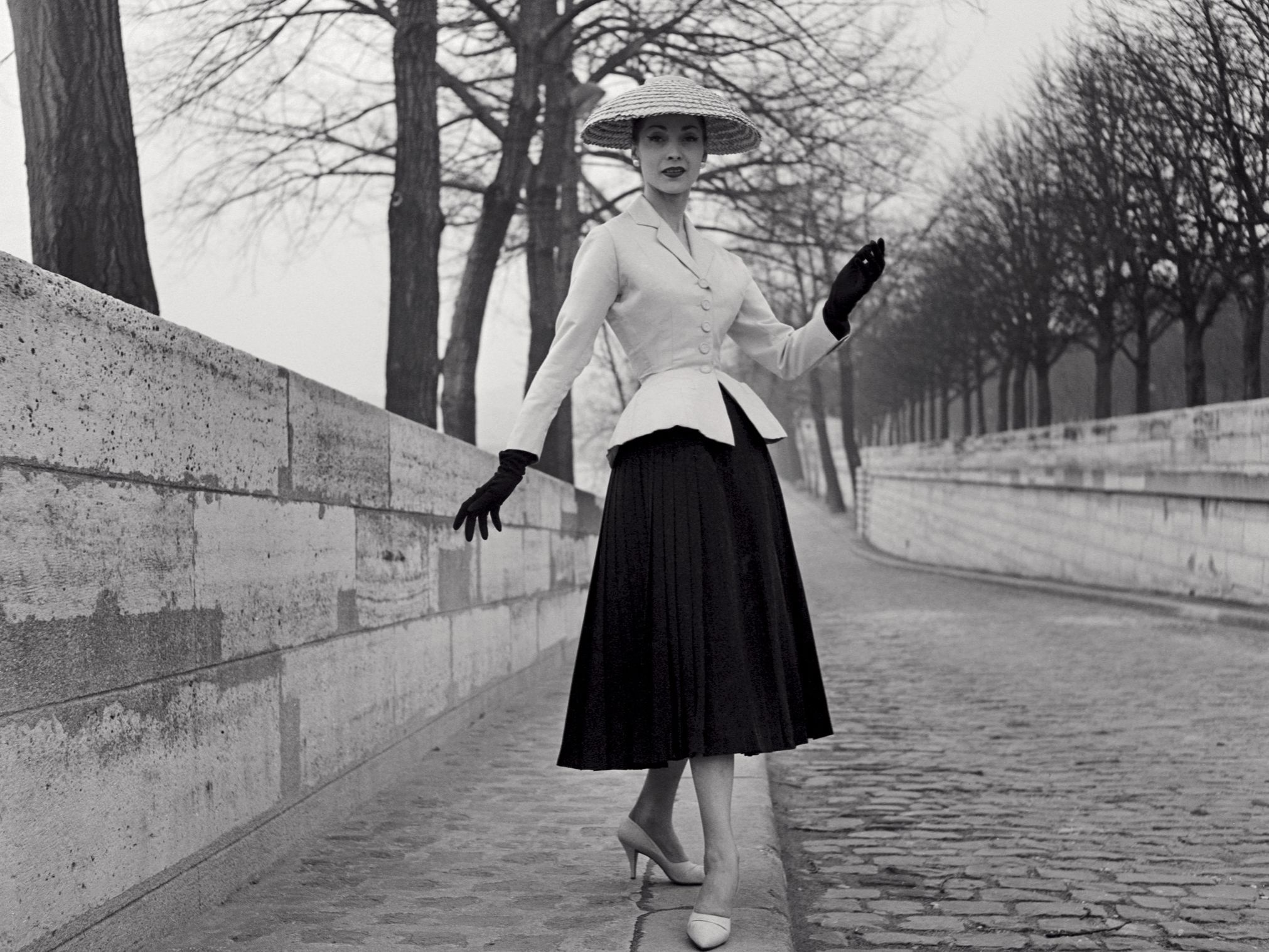
He did not recognize her. She was too thin, too changed. The sister he loved stood in front of him, and he walked past her. Slowly, Catherine rebuilt her life. She reunited with Hervé. She returned to flowers, starting a business that made her one of the first women in France licensed to sell cut flowers professionally. Meanwhile, Christian was on the verge of changing fashion. On February 12, 1947, he unveiled his first collection. The world called it the New Look. On the same day, he launched his first perfume. According to those who were there, he was struggling to name it when Catherine entered the room. Someone said, “There’s Miss Dior.” Christian answered without hesitation. That was it. He named the perfume after his sister. Not as a marketing move. As a tribute. In 1952, Catherine testified at the trial of the collaborators who had run Rue de la Pompe. She spoke clearly about what had been done and named the women who had suffered beside her, many of whom never returned.
She was decorated for her service. Croix de Guerre. Legion of Honour. Medals that could never fully account for what she had endured. Christian bought land in Grasse, near where they had grown up. Catherine became an expert in cultivating roses, jasmine, and lavender for perfume. The flowers she grew were sold to the House of Dior. When Christian died suddenly in 1957, Catherine helped protect his legacy. She worked to preserve his memory and his work. She lived quietly, surrounded by flowers, for decades. She died in 2008 at ninety years old. Once, when a young veteran asked her how she had survived, she gave a simple answer. LOVE LIFE. Every time someone opens a bottle of Miss Dior, they are touching a story that did not begin with glamour. It began with refusal. With endurance. With a woman who chose not to speak when speaking would have been easier. The perfume was never just about beauty. It was about surviving long enough to create it again.
The legacy of Catherine Dior…STRENGTH, COURAGE, DETERMINATION AND ENDURANCE bottled and sold worldwide as a beautiful scent that reminds us to LOVE LIFE.