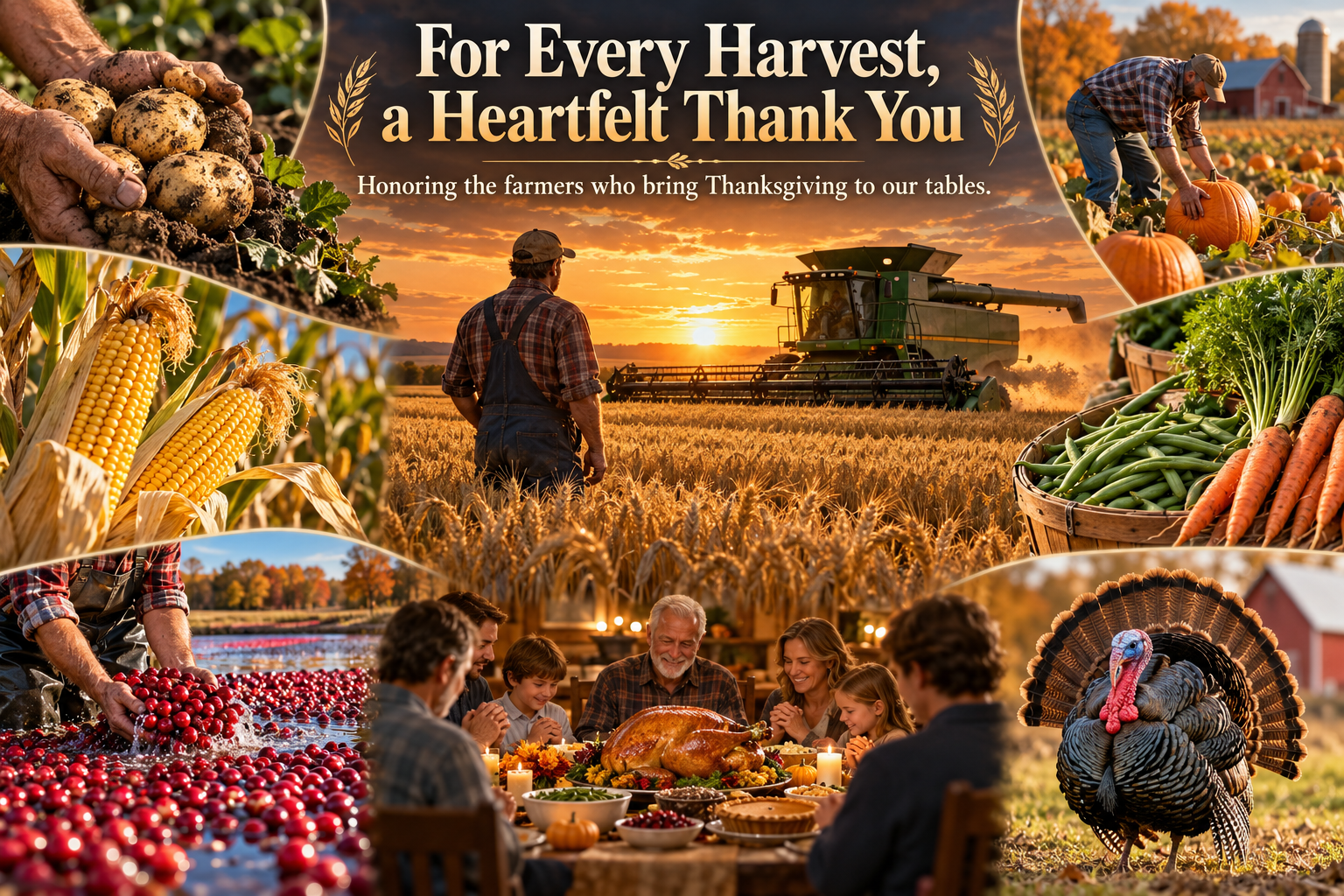

More than 400 years after the first Thanksgiving, America’s farmers are still bringing the feast to our tables.
Every Thanksgiving, families across America gather around tables filled with turkey, mashed potatoes, stuffing, sweet potatoes, cranberry sauce and pumpkin pie. It’s a tradition steeped in history, family and gratitude. But behind nearly every dish on that table is a story that began long before the groceries reached our kitchens.
It’s a story about farming.
And while much has changed since the harvest celebration of 1621, one thing remains remarkably consistent: Without farmers, there would be no Thanksgiving feast.
The First Thanksgiving Was a Celebration of the Harvest
When English colonists and members of the Wampanoag people gathered in Plymouth in the fall of 1621, they weren’t celebrating a holiday quite like the one we recognize today. They were marking a successful harvest following a year of extraordinary hardship.
Agriculture was essential to their survival.
The Wampanoag had cultivated the land for generations, growing corn, beans and squash while supplementing their diets with fish, wild game, nuts and berries. Their agricultural knowledge, developed over centuries, would prove invaluable to the newly arrived colonists.
Tisquantum, commonly known as Squanto, helped teach the English settlers how to cultivate corn and use fish to enrich the soil. These farming practices contributed to the harvest that became the foundation of the historic gathering.
The celebration lasted three days. Historical accounts confirm that the meal included wildfowl, venison and corn. The Wampanoag contributed five deer, while other foods likely included squash, beans, fish and shellfish.
Interestingly, there were no mashed potatoes, marshmallow-topped sweet potatoes or pumpkin pies. Potatoes had not yet become part of the English colonists’ New England diet, and the ingredients and equipment needed to make pies were limited.
But the significance of that gathering went beyond the menu. It represented the importance of the land, the harvest and the people whose labor and agricultural knowledge made survival possible.
For Indigenous peoples, giving thanks for the harvest was already a longstanding tradition. The 1621 gathering was one moment in a much longer history of Native American agriculture and harvest celebrations.
Where Does Our Thanksgiving Dinner Come From Today?
More than four centuries later, America’s Thanksgiving dinner is still an agricultural accomplishment. The difference is that today’s meal often represents the work of farmers and ranchers scattered across dozens of states.
Consider the journey of a traditional Thanksgiving feast.
Turkey: The centerpiece of the modern Thanksgiving table typically comes from commercial turkey farms, with Minnesota, North Carolina and Arkansas among the nation’s important turkey-producing states. Unlike the wild birds hunted in 1621, today’s turkeys are raised through specialized poultry operations that provide millions of families with their holiday meal.
Potatoes: Those creamy mashed potatoes often begin in the fields of Idaho and Washington, where farmers produce enormous quantities of potatoes for American consumers. Colorado farmers also grow potatoes, particularly in the San Luis Valley.
Sweet Potatoes: North Carolina is the country’s leading sweet potato producer, providing much of the crop that becomes a favorite Thanksgiving side dish.
Cranberries: The familiar bright-red cranberry sauce has strong agricultural roots in Wisconsin and Massachusetts, where growers harvest cranberries from specialized beds and marshland farming operations.
Pumpkins: Illinois is a powerhouse in pumpkin production, particularly pumpkins destined for processing. In 2025, Illinois farmers harvested approximately 533 million pounds of pumpkins, supplying an important ingredient in one of America’s favorite holiday desserts.
Stuffing and Dinner Rolls: Wheat grown across the Great Plains, including Colorado, Kansas and other agricultural states, is milled into the flour used to make bread, rolls and stuffing.
Corn and Vegetables: From Midwestern cornfields to vegetable farms across the country, American agriculture supplies the side dishes that complete the holiday meal.
And right here in northeastern Colorado, agriculture remains an essential part of that story. The farms and ranches across Weld County and the surrounding Eastern Plains contribute to a food system that stretches far beyond our local communities.
The wheat fields, corn crops, cattle operations and family farms we pass along our rural roads are part of the same agricultural tradition that made the harvest celebration of 1621 possible.
What Will Thanksgiving Dinner Cost in 2026?
Although the holiday’s agricultural roots remain unchanged, the price of putting Thanksgiving dinner on the table certainly has.
According to the American Farm Bureau Federation’s annual Thanksgiving dinner survey, the national average cost of a traditional meal for 10 people was $49.87 in 2016 and by 2025, that same traditional meal had climbed to $55.18, an increase of approximately 10.6% over nine years.
What can families expect in 2026?
As of early October, the Farm Bureau’s official 2026 Thanksgiving dinner survey has not yet been released. However, the U.S. Department of Agriculture’s September Food Price Outlook projects that grocery prices will increase approximately 2.4% during 2026.
Applying that projected increase to the Farm Bureau’s 2025 Thanksgiving dinner cost produces an estimated $56.50 for that same traditional Thanksgiving meal in 2026.
Of course, the final cost will depend on the price of turkey, seasonal promotions, weather conditions, transportation expenses and regional differences in grocery prices.
Families purchasing a larger turkey, additional side dishes or specialty ingredients should expect to spend more than the national average.
Higher Grocery Prices Don’t Necessarily Mean Higher Farm Profits
One important part of the Thanksgiving story often gets overlooked.
While consumers may pay more for their groceries, that doesn’t automatically mean farmers are receiving more for the products they raise.
Farmers face their own rising expenses, including equipment, fertilizer, seed, fuel, labor, insurance and transportation. Weather extremes, crop losses and changing market conditions add even more uncertainty.
Consider the difference between the price a farmer receives for a bushel of wheat and the price a consumer pays for a package of dinner rolls.
Between the field and the dinner table are grain elevators, mills, bakeries, packaging companies, transportation providers, distributors and grocery stores. Each adds services and expenses to the finished product.
The same principle applies to almost everything on our Thanksgiving tables.
That means the final grocery bill reflects far more than the value of the crops and livestock themselves.
It’s worth remembering that while we worry about the cost of Thanksgiving dinner, many of the farmers responsible for producing it are worrying about whether their harvest will cover the cost of growing it.
A Thanksgiving Tradition Worth Preserving
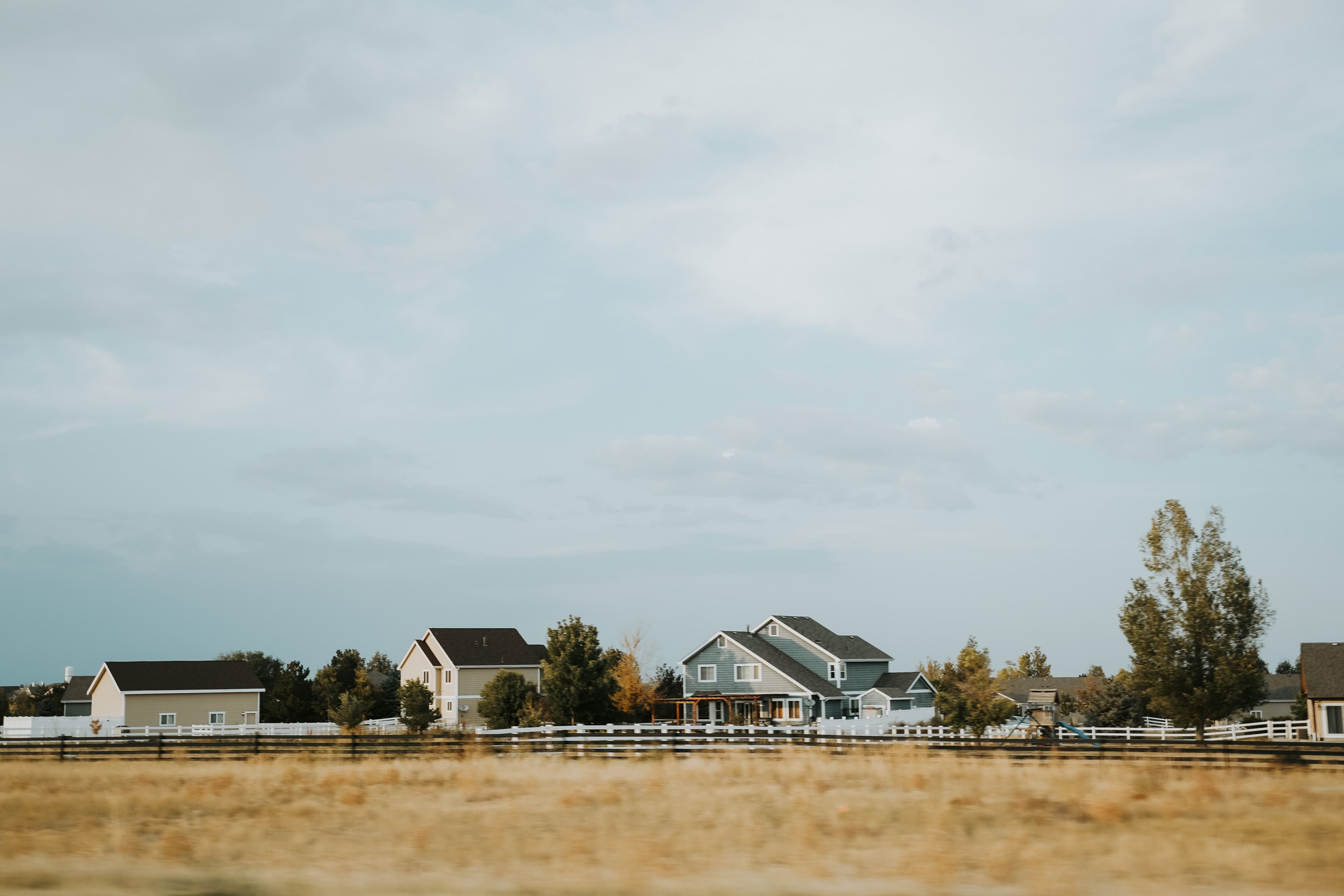
Here in rural Colorado, we’re fortunate to live in communities where agriculture isn’t simply something we read about. It’s part of our landscape, our economy and our identity.
We see tractors moving between fields, combines working late into the evening and cattle grazing in pastures. We know families whose livelihoods depend on the weather, the markets and the success of each growing season.
And perhaps that gives us a special appreciation for the history behind Thanksgiving.
The harvest celebration of 1621 and the Thanksgiving dinners of 2026 may look very different, but they share something fundamental: both depend on the people who work the land and the resources it provides.
So, as we gather around our tables this Thanksgiving, perhaps we can add one more expression of gratitude to the traditional blessings for family, friends and good health.
Let’s remember the farmers and ranchers.
The ones who rise before dawn, work through uncertain seasons and take the financial risks necessary to grow and raise the food that nourishes our country.
Because from the first harvest feast to the Thanksgiving tables of today, the most important ingredient has always been the same.
The dedication of those who feed us.
Happy Thanksgiving from the Lost Creek Sentinel — celebrating the people, traditions and agricultural heritage that make our communities strong.